
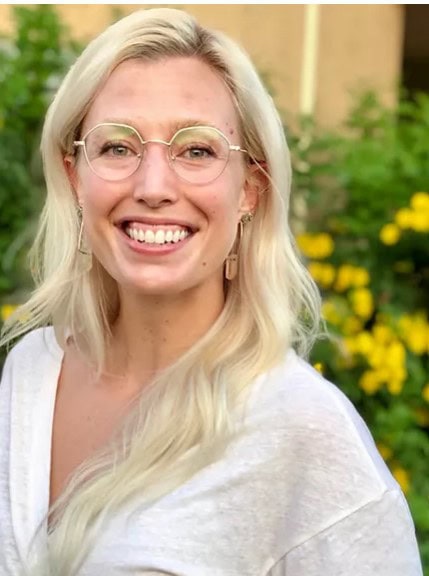
No. 883EIntegratorListed 2021
Screenshot 2021 04 05 214801
She Her

Lionheart Wellness

Austin, Texas, United States

Psychotherapist Helping People Find Healing, Love and Joy

At a glance

Specialty · Practice · Access

What they treat

Conditions
AnxietyBehavioral IssuesChild or AdolescentCoping SkillsEating DisordersEmotional DisturbanceFamily ConflictHarm reductionPTSDRelationship IssuesSpiritualityTraumaTherapy
Modalities
Individual
Types of therapy
EMDRTrauma Focused
Medicines
Cannabis

Who they see

Populations
Adolescents TeenagersAdults
Session formats
In PersonOnline

About

Trained in EMDR, CRM and DNMS. Specializing in working with Complex PTSD, relationships or all types and building emotional skills. Extensive experience working with LGBTQIA+ folx. Contact me today for a free consultation or to hear more about ways I can help.

About me
I recently moved to Austin from Salt Lake City, Utah where I had the privilege of working directly with clients struggling to make space for themselves in a highly oppressive, fundamentalist culture. I spent 6 years working predominantly with the LGBTQIA+, kink and poly communities and am excited to continue my work with a new Texan flare. I love working with all who challenge binary, hetero-normative, monogamy-normative, racist and xenophobic ideas. Creative, intentional relationships and healing developmental trauma are particularly near and dear to my heart.

My approach in therapy is to build relationships that helps us get to the root of issues. We are complex beings and we each have a unique route toward healing and growth. I want to help you find yours. I use mainly use attachment, mindfulness and somatic modalities to help the people I work with connect to their truth and move through what causes them discomfort.

I’m a Gemini, an astrology enthusiast, a conceptual and practical artist, a social justice advocate, a nature-lover, a neuroscience nerd, a survivor, a healer and a recovering perfectionist. All of what I do and who I am informs my therapy. I am equally invested in my own life, fulfillment and healing as I am in the lives, fulfillment and healing of the people I work with. The more we will fill and expand ourselves and our lives, the more we have to offer others.

How I work with clients

Most people think of trauma as big events with big impacts. And while this is true, trauma also exists on a spectrum that ranges from stubbing your toe, to watching everyone you love die in front of you. There is so much context to what our body interprets as trauma and how trauma enters into our bodies and minds. Trauma gets held in our bodies and minds until it is processed and released. Many of us find those unaddressed emotions and trauma symptoms it spilling out into our every day lives without warning and often in ways we don't like. ​ Complex Post-Traumatic Stress Disorder (CPTSD) has been building attention and awareness in the past few years, but it is still not well understood considering how common it is. Everyone experiences trauma on some level and sometimes we have just the right conditions to process and work through the trauma we experience. For example, stubbing your toe is a trauma (a small one), being able to yell "ouch!" and tell someone that your toe hurts (be witnessed by someone), often is enough to process that small trauma. When we experience multiple traumas, don't have the right conditions to process trauma, experience trauma when we are young, or the trauma is related to caregivers, the trauma can become complex. When the trauma is complex, the symptoms are complex and don't look like traditional PTSD. Complex PTSD symptoms can look like a lot of different things. Substance abuse, ADD, ADHD, Anxiety, Eating Disorders, Depression, Dissociative Disorders, dysfunctional relationships, codependency and even Personality Disorders can often be misdiagnosed Complex PTSD. We learn ways of coping with complex trauma that help us survive, but eventually cause us harm. When we seek out help in changing the things that helped us cope, we can be judged, re-traumatized and misunderstood. Treating the symptoms and coping methods does not address the underlying trauma and will leave those with CPTSD feeling lacking. Addressing the ways our brain and bodies have been shaped and reinforced due to the trauma we experienced creates long-lasting change, relief and healing. There are many modalities for treating trauma that work very well, EMDR and CRM being among them. However, having an understanding of the nervous system and the ways that trauma affects the body is crucial to treating the trauma at its' roots within our bodies. I help my clients build a relationship with their bodies and internal systems to better understand the signals they are getting and what they need to heal.

Treatment approach

Eye Movement Desensitization Reprocessing (EMDR) and Comprehensive Resource Model (CRM) are types of therapy that were initially created for working with trauma, but have since been found to be helpful with most issues brought to therapy. Both EMDR and CRM use something called bi-lateral stimulation which entails lights, music, soft vibrating mallets or tapping to stimulate the right brain then left brain in sequence. Doing so helps speed up processing of emotions, content, etc. and regulate the nervous system. After connecting to bilateral stimulation and strengthening feelings of safety and security within the body, I guide clients into the pain of their experiences, the fear of feeling the pain of their experiences and the blocks that get in the way of allowing them to release the trauma or emotions from their bodies. Processing the stuck emotions or trauma out of the body allows us to create new truths for ourselves like "I am strong and I survived" or "I can be safe in relation to others". Neither of these modalities can be used on clients without their consent or awareness because they look a bit different from traditional talk therapy. These modalities are not for everyone and I am trained in many other modalities, but they are an option for those interested in transforming their trauma at a quicker pace than traditional talk therapy.

No reviews yet — be the first to share your experience.