
- Sliding-scale / financial assistance
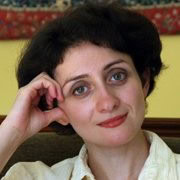
Alexandra Dimant
Tenafly, New Jersey, United States
Change Through Insight: Trauma Specialist Practicing in NY and NJ
At a glance
Specialty · Practice · Access
What they treat
- Conditions
- AnxietyBehavioral IssuesCareer CounselingChild or AdolescentCodependencyDepressionDivorceFamily ConflictGriefHolistic approachLife TransitionsObsessive-Compulsive (OCD)ParentingPeer RelationshipsPregnancy; Prenatal; PostpartumPTSDRelationship IssuesSelf EsteemSexual AbuseSpiritualitySuicidal IdeationTraumaWomen's Issues
- Modalities
- Individual
- Types of therapy
- EMDREclecticExistentialHumanisticInternal Family Systems (IFS)InterpersonalMindfulness-Based (MBCT)PsychodynamicRelationalSomaticTrauma Focused
Who they see
- Populations
- AdultsElders
- Languages
- EnglishRussian
Accepted payment
- Payment methods
- Insurance
- Insurance
- AetnaOptumUnitedHealthcareOther
About
I believe that my work is in helping clients walk less blindly through life. I try to ask questions to clarify the principles underlying the ways they relate to the world and others. I help not only with common problems (anxiety, depression, PTSD, phobias, OCD, etc.) but also work with those whose issues are not easily captured by a diagnosis and are existential in nature. The so-called “worried well” come to uncover and work through the sources of internal struggles, in order to become their best selves and live a more fulfilling life. Over the years, as I have explored and experienced a variety of mind-body techniques, such as yoga and meditation, it has become clear to me that words alone are not enough to help us with struggles, and so for those who are curious, I incorporate breath practices, yoga, and meditation into my work.
Briefly, a little on my background and training:
I have been practicing psychotherapy since 2002 starting a full-time private practice in 2008. I did my undergraduate work at Binghamton University (State University of New York), majoring in history, and completed clinical graduate studies at New York University (NYU). My clinical training began at the Counseling and Wellness Services where I helped students with mood disorders and school adjustment problems. The work with young people continued at an adolescent clinic of the Jewish Board of Family and Children Services (JBFCS). While there, I finished a 3-year training program at the Martha K. Selig Educational Institute of the JBFCS. I have also completed a training program of the Postpartum Stress Center and am certified to treat women suffering from a variety of postpartum conditions. I am also trained in EMDR having completed EMDR training Levels I, II, and III through the Parnell Institute. I am fully bilingual and practice in both English and Russian.
How I work with clients
Reviews
No reviews yet — be the first to share your experience.