What is a Ketamine K Hole Like?
Medical Editor: Dr. David Cox, PhD, ABPP Editor’s note: Psychable does not promote or encourage the use of illegal substances. All the information presented is for informational purposes only, to help the reader make smart choices when using psychedelic medicines. Depending on who you talk to, a k hole is either the worst, most terrifying […]
Medical Editor: Dr. David Cox, PhD, ABPP
Editor’s note: Psychable does not promote or encourage the use of illegal substances. All the information presented is for informational purposes only, to help the reader make smart choices when using psychedelic medicines.
Depending on who you talk to, a k hole is either the worst, most terrifying thing that can happen or a therapeutic part of spiritual healing. A k hole is a common slang term describing the ketamine experience. A k hole is a collection of side effects that occur when one takes ketamine, a substance with a fascinating history and perhaps even more interesting future. So what is a k hole like? Keep reading.
What Is Ketamine?
While ketamine is considered a psychedelic, it’s technically in a class of drugs called dissociative anesthetics. It has a memoir-worthy history. Ketamine was discovered in 1956 and approved in 1970 as an anesthetic agent derived from phencyclidine. Far before ketamine became a party drug beloved by club kids, it was saving lives as an anesthetic on the battlefields of the Vietnam War. It’s extremely useful in trauma settings because it maintains hemodynamic stability or stable blood flow, making it safer than many other anesthetics. Ketamine is even listed on the World Health Organization Model List of Essential Medicines, which names medications considered to be most effective and safe while meeting a health system’s most important needs.
What Are The Side Effects of Ketamine?
Like most psychedelics, ketamine has immense healing potential and comes with side effects, many of which may be enjoyable. At lower doses, these include euphoria and a feeling of connectivity. When ketamine is administered at higher doses in surgical use usually the patient is rendered unconscious.
When ketamine is used therapeutically, it is given at subanesthetic doses. Evidence supports the use of ketamine for depression, post-traumatic stress disorder (PTSD), and suicidal thoughts It’s also being researched for chronic pain, migraines, and OCD. While ketamine gained FDA approval in March of 2019 in the form of a nasal spray Spravato (esketamine) for treatment-resistant depression, most of the research on subanesthetic ketamine is on intravenous ketamine or infusions.
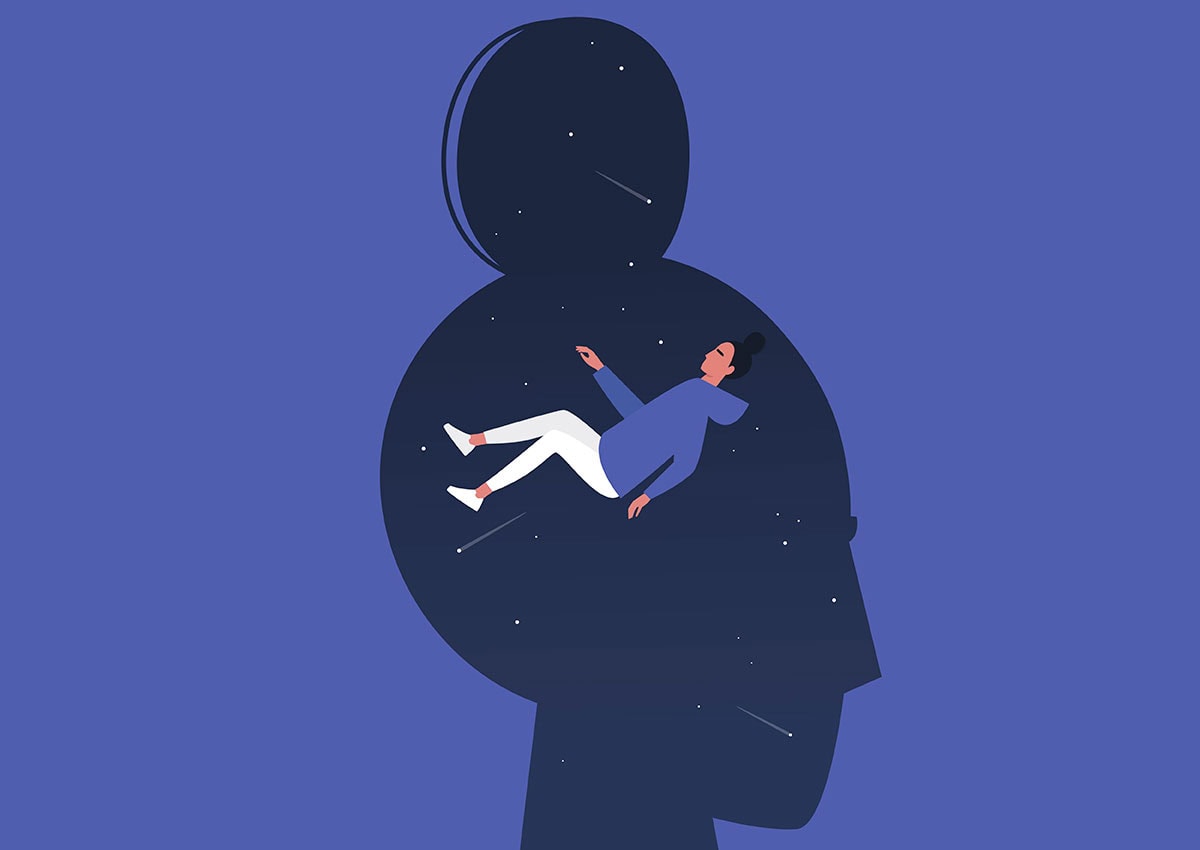
When one takes a subanesthetic dose of ketamine, the side effects can include euphoria, dissociation, closed-eye hallucinations and visuals, a floating sensation, nausea, and reduced immobility. This collective dream-like experience, in particular of impaired mobility, is sometimes referred to as a k-hole.
What Is A K-Hole?
If one was using ketamine recreationally at a dance club and took enough so that it was difficult to move, understandably, that could be a terrifying experience. “I felt like I was floating. I couldn’t feel my body. It was wack,” writes a Reddit user on a post titled “The dreaded K-hole.”
As with most psychedelics, the side effects of ketamine can either feel like a nightmare or a therapy session depending on dose, set, and setting. Unsupervised, alone, or at a party, feeling like you’re floating out of your body can be extremely disturbing and could cause emotional harm. Because ketamine can be abused, elevate blood pressure, or cause urinary tract problems at high doses, it’s very important that it’s only used in a safe and supervised setting.
In a reputable ketamine clinic, these same effects can be quite serene. Clients learn to let go, relax, and let the healing properties literally course through their veins. Not all ketamine therapy patients experience k hole symptoms, but some do, and even request it. The dose is carefully calculated based on one’s body weight and needs. There is an emergency button at the ready if a patient begins to feel anything undesirable. However, many people find this dream-like state to be a safe and comforting way to take their medicine, access otherwise scary thoughts or trauma, and let their guard down. “I see a lot of different colors, textures, I analyze the hell out of sounds, I’ve talked to God, and I was even flying,” writes another Reddit user on a thread about k holes during infusions.
When administered in a psychiatric or during ketamine-assisted psychotherapy, k holes usually occur with higher dose sessions versus lower dose sessions. Patients report leaving their bodies and do not have an awareness of the couch they are sitting in, the practitioner they are with, or a general sense of where they are. A k hole experienced in a clinical setting may help individuals detach from everyday thoughts and body sensations of depression, fear, anxiety, and panic. It shows the body and central nervous system how to live with less depressive thought, somatic, and behavioral patterns. Clients learn there is another side to life outside of their symptoms. Their hope can be renewed.
Final Thoughts and Conclusions
The term k hole originated from recreational use. When one takes enough ketamine to experience immobility and enter a dream-like state while alone, or unsupervised in a social setting, it can be understandably very scary. The concept of the k hole perfectly illustrates how dose, set, and setting is crucial in all psychedelic experience. While some ketamine patients never experience such side effects, others do, and even find them therapeutic. All of this stresses the importance of obtaining psychedelic therapy through safe and supervised settings so that the benefits far outweigh the risks.