Muslim Art: Have Psychedelics Impacted Islamic Art Forms? Are Psychedelics Considered Halal?
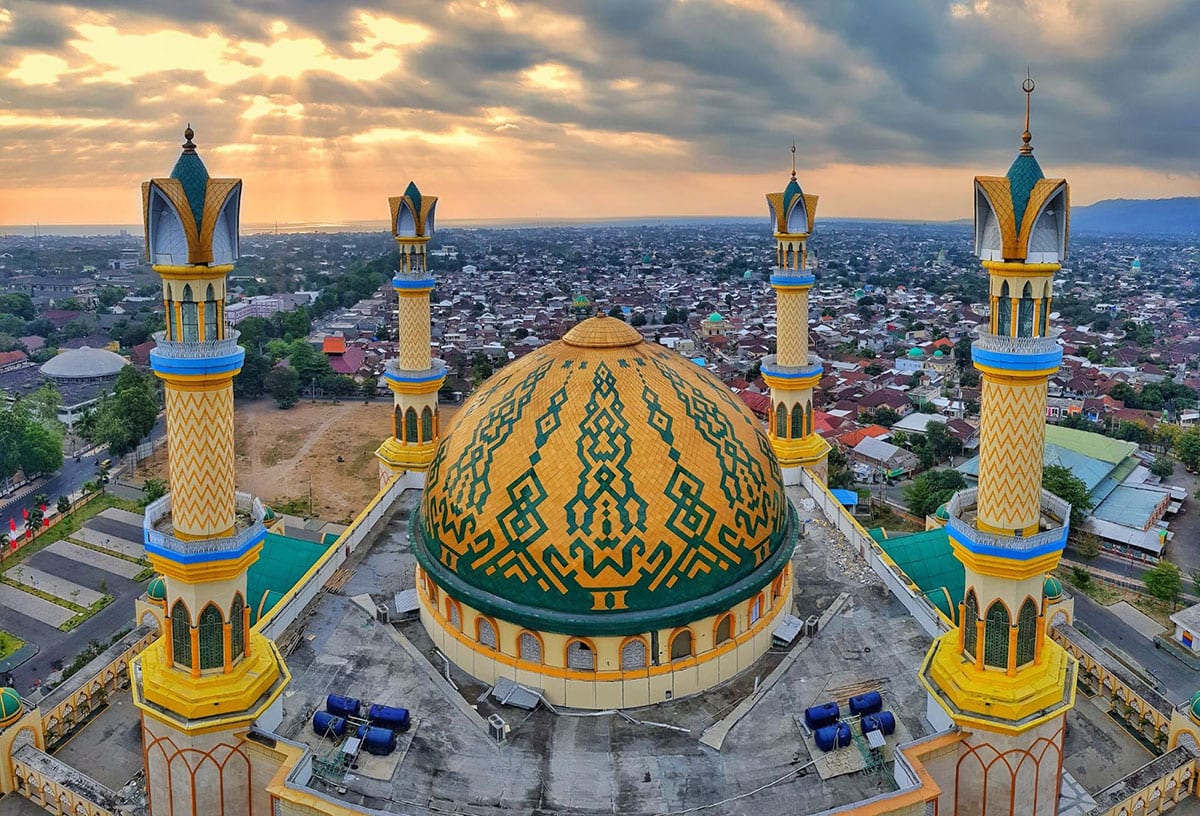
Psychedelic art is known for its recreation of themes that are geometric, often colorful, with intricate repeating patterns—like looking through a child’s kaleidoscope. In Islam, these artistic ornamentations—called arabesques—crop up in stained glass, tapestries, architecture, furniture carvings and laid into intricate mosaics. Mandalas in Tibetan, Navajo, and other cultures or religious traditions are similar in their […]
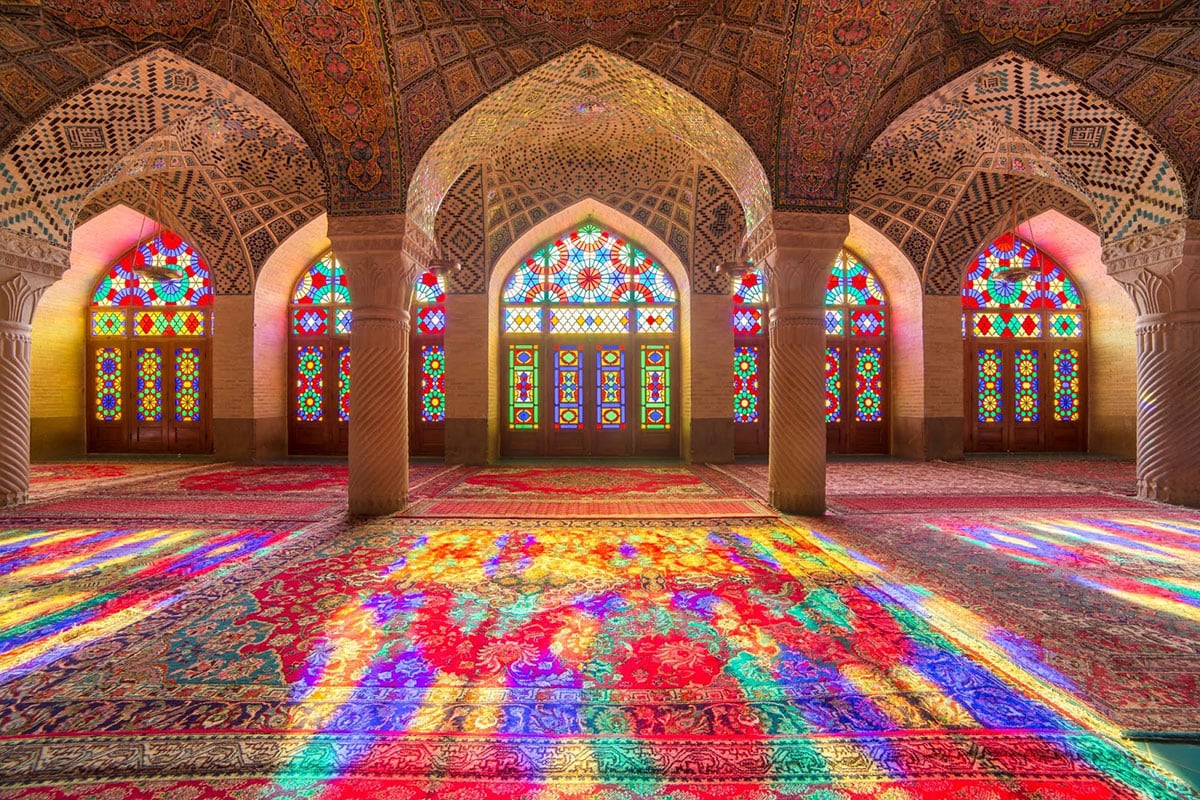
Psychedelic art is known for its recreation of themes that are geometric, often colorful, with intricate repeating patterns—like looking through a child's kaleidoscope. In Islam, these artistic ornamentations—called arabesques—crop up in stained glass, tapestries, architecture, furniture carvings and laid into intricate mosaics. Mandalas in Tibetan, Navajo, and other cultures or religious traditions are similar in their patterning, but Islamic arabesques are some of the most dramatic and intricate seen in any tradition.
The word mandala is a Sanskrit word for sacred circle and is a concrete representation of the Divine Creator's absorption into a sacred center. The Navajo also call the center of a sacred circle the “spiritual place of emergence.”
In contrast, arabesques in Islamic tradition may have pre-Islamic, Turkish roots. Arabesques contain geometric shapes that are specific to Islamic and pre-Islamic customs and nomadic habits. Particular attention to mathematical logic and geometric abstraction are unique to arabesques displayed in mosques—which are centers of religious worship.
In Islam, the word haram means forbidden. It is against the orthodox practice (haram) to reproduce any imagery of Muhammad—their lauded prophet and founder. It is especially offensive to depict imagery of the God of Islam, Allah. These arabesques—depicting nature and the cosmos which muslims are encouraged to ponder—invoke a spiritual devotion for followers of Islam, allowing them to more perfectly meditate on Allah.
In the Islamic tradition, Allah is formless and unknowable, and to recreate images of him is considered a form of idolatry. As a result, the intricate artistry found throughout Islamic nations and their communities across the globe, will rarely (if ever) include visages of lauded prophets or caliphate (heads of governing Islamic sects or groups of followers). However, Islamic art contains a high level of craftsmanship and stunning, intricate geometric images. These are art forms representative of the infinite nature of Allah's creation. Arabesques appear to capture the essence of Allah, nature, and the cosmos with sacred salience.
Is there another reason why Islamic artistry looks so psychedelic?
Is Islamic art psychedelic? Arguably, yes. The term psychedelic was coined by British psychiatrist Humphry Osmond in his correspondence to Aldous Huxley, the author of The Doors of Perception. Osmond, who strongly supported psychedelics—convinced Huxley to experiment with mescaline. The term psychedelic means ‘mind-manifesting.’
Psychedelic substances like psilocybin and LSD are renowned for recreating mandalas as visual hallucinations often experienced during the journey. Many people say that entheogens such as psilocybin creates feelings of being close to the divine. In fact, the word entheogen means “generating the divine.”
Visually, there are theories explaining why mandalas and geometric shapes are part of a psychedelic experience. Many traditional psychedelic substances such as LSD, psilocybin, and mescaline are thought to stimulate serotonin by binding to and mimicking the serotonin 2A receptor sites (5-HT2A). The release of serotonin may create the intricate formations someone sees during psychedelic use.
Does Islamic art represent “mind-manifesting”? Could Islamic “mind-manifesting” be a more divine art form? Are the conventional motifs of Islamic art representative of a part of the human psyche closely related to the spiritual experience of the divine—transcending limited vocabulary and literal meaning? When visages of the divine are considered haram, perhaps this “mind-manifesting” artistry is the nearest representation of Allah considered halal (permissible).
Were Islamic art forms created under the influence of psychedelics?
Do ascetic religious practices such as devout prayer recreate the manifestation of the divine? Some research shows some altered states of consciousness can be recreated via fasting, self-mutilation, trance dancing, sensory overload, meditation, chanting, and solitary vision quests. Perhaps the altered state of consciousness experienced during a psychedelic journey is similar to what some artists, musicians, and poets describe as being in a flow state. Perhaps these altered states of consciousness allow human beings to enter into the mind of the “infinite divine.”
Some research implies that ancient Iranians participated in religious rituals where entheogens were part of a sacred practice that allowed participants to commune with the divine. Perhaps artistic influence in Islamic tradition is a result of these psychoactive substances creating visual hallucinations—resulting in the artists recreating portrayals of their experiences. Perhaps arabesque ornamentation found throughout Islam is a represenation of entheogenic, “mind manifestation.”
As for present day Islamic culture, a recent fatwa (a ruling on Islamic law) set forth by The Grand Ayatollah Sayyed Mohammed Sadeq Hussaini Rohani now permits the use of certain psychedelic substances. As a side note, this Grand Ayatollah is Shia muslim which does represent a minority of muslims. This fatwa offers some hope for followers of Islam who will now be able to offer more evidence in support or against these provocative theories.
The digital platform and online community Psychable is dedicated to providing helpful resources debunking unhelpful stigmas surrounding psychedelic use. Psychable provides means for accessing legal psychedelic-assisted therapy options, community support, and partners with advocates who work towards impacting legislation for psychedelics at the national, state and local levels.